Table of Contents
ToggleOverwatch techniques form the backbone of modern tactical operations. Military units, law enforcement teams, and security professionals rely on these methods to move safely through hostile or uncertain environments. The concept is simple: one element provides cover while another advances. But execution demands precision, timing, and clear communication.
This guide breaks down the core overwatch techniques used by tactical teams worldwide. Readers will learn how overwatch positions work, the difference between bounding and traveling overwatch, and how effective communication ties everything together. Whether training for military operations or studying tactical doctrine, these fundamentals apply across multiple disciplines.
Key Takeaways
- Overwatch techniques provide essential cover and protection by positioning one element to observe and suppress threats while another element advances.
- Bounding overwatch maximizes security in high-threat situations by alternating movement between two elements, though it sacrifices speed for safety.
- Traveling overwatch balances speed and security by keeping both elements moving simultaneously with proper spacing for quick fire support.
- Effective overwatch positions require clear sightlines to threat areas, adequate cover or concealment, and reliable communication with the moving team.
- Silent hand signals and brief radio messages are critical for coordinating overwatch techniques without alerting enemies or causing confusion.
- Consistent training and rehearsal transform overwatch techniques from individual skills into seamless team capabilities that can save lives in tactical operations.
What Is an Overwatch Position
An overwatch position places one unit or team member in a location where they can observe and protect another element. The overwatch element maintains visual contact with the area ahead. They provide suppressive fire if threats appear. This creates a safety net for the advancing team.
The ideal overwatch position offers several advantages. It provides clear sightlines to likely threat areas. It offers concealment or cover from enemy observation and fire. It allows quick communication with the moving element.
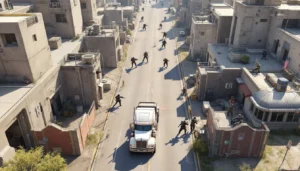
Tactical teams select overwatch positions based on terrain analysis. High ground often works well because it extends visual range. Urban environments might require positions in buildings or behind vehicles. The key factor remains the same: the overwatch element must see potential threats before those threats can engage friendly forces.
Overwatch techniques depend heavily on proper positioning. A poorly chosen position limits the overwatch element’s effectiveness. They might lack the angle to engage threats. They might expose themselves to flanking fire. Smart position selection prevents these problems.
The overwatch role requires patience and discipline. The covering element stays alert while teammates move. They scan for movement, unusual sounds, or other threat indicators. This constant vigilance keeps the entire team safer during operations.
Key Overwatch Techniques for Tactical Operations
Two primary overwatch techniques dominate tactical doctrine: bounding overwatch and traveling overwatch. Each serves different situations and threat levels. Understanding both methods gives teams flexibility during operations.
Bounding Overwatch Explained
Bounding overwatch provides maximum security during high-threat situations. Teams divide into two elements. One element moves while the other covers. Then they switch roles.
The process follows a specific pattern. The overwatch element establishes a covered position with good sightlines. The bounding element advances to the next covered position. Once set, the former bounding element becomes the new overwatch. The original overwatch element then bounds forward.
This technique sacrifices speed for security. Movement happens in short, controlled segments. Each bound typically covers 50 to 100 meters, though terrain and visibility affect this distance.
Bounding overwatch techniques work best in several scenarios. Contact with enemy forces is expected or likely. Visibility is limited by terrain, weather, or darkness. The team crosses open ground with little natural cover. Intelligence suggests ambush or sniper threats.
The main drawback is slow progress. A team using bounding overwatch might cover ground at one-quarter the pace of standard movement. But that tradeoff makes sense when survival outweighs speed.
Traveling Overwatch Method
Traveling overwatch offers a middle ground between speed and security. The team moves together but maintains specific spacing and positioning. The lead element advances while the trail element follows at a distance ready to provide fire support.
Unlike bounding overwatch, both elements move simultaneously. The trail element watches the flanks and rear. They position themselves to quickly support the lead element if contact occurs.
Spacing between elements varies by terrain. Open terrain might require 50 meters or more between elements. Dense urban environments might reduce this to 20 meters. The goal is maintaining mutual support while avoiding a single point of failure.
Traveling overwatch techniques suit moderate threat environments. Enemy contact remains possible but not imminent. The team needs to cover ground faster than bounding overwatch allows. Terrain provides some natural cover along the route.
This method requires good situational awareness from all team members. Everyone must understand the formation and their responsibilities within it. The trail element must stay alert and ready to transition instantly from movement to fire support.
Communication and Coordination Best Practices
Overwatch techniques fail without solid communication. Teams must coordinate movement, signal when positions are set, and alert each other to threats. Poor communication turns a well-planned operation into chaos.
Hand signals provide silent communication during tactical operations. Common signals include “halt,” “move out,” “enemy spotted,” and “position set.” Teams should standardize their signals before operations. Everyone must understand what each gesture means.
Radio communication supplements hand signals when distance or obstacles block line of sight. Messages should be brief and clear. Standard formats reduce confusion. “Overwatch set” tells the bounding element they can move. “Bounding” alerts the overwatch element that movement has started.
Coordination extends beyond simple movement commands. Teams should establish contingency plans before operations begin. What happens if the point element takes fire? Where do elements rally if separated? These plans reduce decision time during contact.
Effective overwatch techniques require practice. Teams should rehearse transitions between overwatch and bounding elements. They should practice communication under stress. They should run scenarios that test their coordination.
The best teams make overwatch techniques look effortless. That appearance comes from hours of training. Each member knows their role. Each member trusts their teammates to execute. This trust and competence turn individual skills into collective capability.